Purchasing property in Spain as a Belgian buyer involves legal and tax rules that differ substantially from the Belgian market. There is no preliminary contract with a statutory cooling-off period, the purchase costs on top of the asking price are higher than in Belgium, and the property must subsequently be declared correctly in your Belgian income tax return. Below is the full process — from NIE number to completion — with the concrete figures and steps needed to make an informed decision.
Step 1: the NIE number — your Spanish tax identification
Every foreign buyer needs a NIE (Número de Identificación de Extranjero) before the title deed can be signed. You can apply at the Spanish embassy in Brussels, or in Spain directly at an Oficina de Extranjería or local police station — in the latter case, typically through an authorised lawyer holding a notarised power of attorney. Allow several weeks for processing if you apply from Belgium; applying in person can be faster but requires an appointment. Without a NIE, the notary cannot execute the deed.

Step 2: open a Spanish bank account
For payments during the purchase process — the deposit, staged instalments and final settlement — a Spanish bank account is strongly recommended. Most Spanish notaries and banks require a Spanish account number for the banker's draft at completion. You open the account in person at a Spanish bank, typically with your passport, NIE and proof of income.
Step 3: appoint an independent lawyer
This is the most critical decision in the purchase process. Choose a lawyer who acts solely in your interests — not those of the selling party. The standard fee is approximately 1% of the purchase price (excluding VAT). Your lawyer verifies that the building permit is valid, that the land is free of debts and encumbrances, and that staged payments are covered by a bank guarantee (see step 5). For an off-plan purchase, this is not optional.
Step 4: the reservation contract and the arras contract
New-build purchases in Spain follow two successive contracts:
Reservation contract: a first, limited payment (typically €3,000 to €10,000) temporarily reserves the property. This contract offers limited legal protection; the substantive commitment is created at the arras contract stage.
Arras contract (contrato privado de compraventa): this is the binding preliminary contract under which — unlike the Belgian compromis — you have no statutory right of withdrawal. Under arras penitenciales (Art. 1454 Cc), you forfeit the deposit if you withdraw from the purchase; if the selling party withdraws, you receive double the amount back. The deposit is standardly 10% of the purchase price. Never sign this contract without your lawyer having reviewed it first.
Step 5: staged payments and the bank guarantee
For off-plan new builds you typically pay in tranches as construction progresses. Spanish law (Ley 57/1968, subsequently integrated into the Ley de Ordenación de la Edificación) requires the seller to cover all advance payments received with an individual bank guarantee (aval bancario) or insurance guarantee. Request written confirmation of this guarantee for each payment. Without it, you risk losing your money if the project is not completed.
Step 6: the title deed (escritura pública)
At completion you sign the title deed before a Spanish notary. The notary verifies identities, reads the deed aloud and confirms payment. After signing, the deed is registered at the Registro de la Propiedad. You are not legally the owner until registration is complete.
Snagging list (lista de defectos): commission an independent inspector to assess the property before you sign the deed. Defects reported after key handover are less reliably remedied.
Purchase costs on top of the price: budget 12 to 14%
The following additional costs apply to new-build purchases in Spain:
- IVA (VAT): 10% of the purchase price of a new-build property. This is a national rate and applies regardless of region.
- AJD (Actos Jurídicos Documentados, stamp duty): approximately 1.2% to 1.5% depending on the autonomous community. In the Comunitat Valenciana (Costa Blanca) the rate is 1.5%; in Andalusia (Costa del Sol) it is currently 1.2%.
- Notary fees: variable, typically €800 to €2,500 depending on the purchase price.
- Land registry fee: €400 to €1,500.
- Lawyer's fee: approximately 1% of the purchase price.
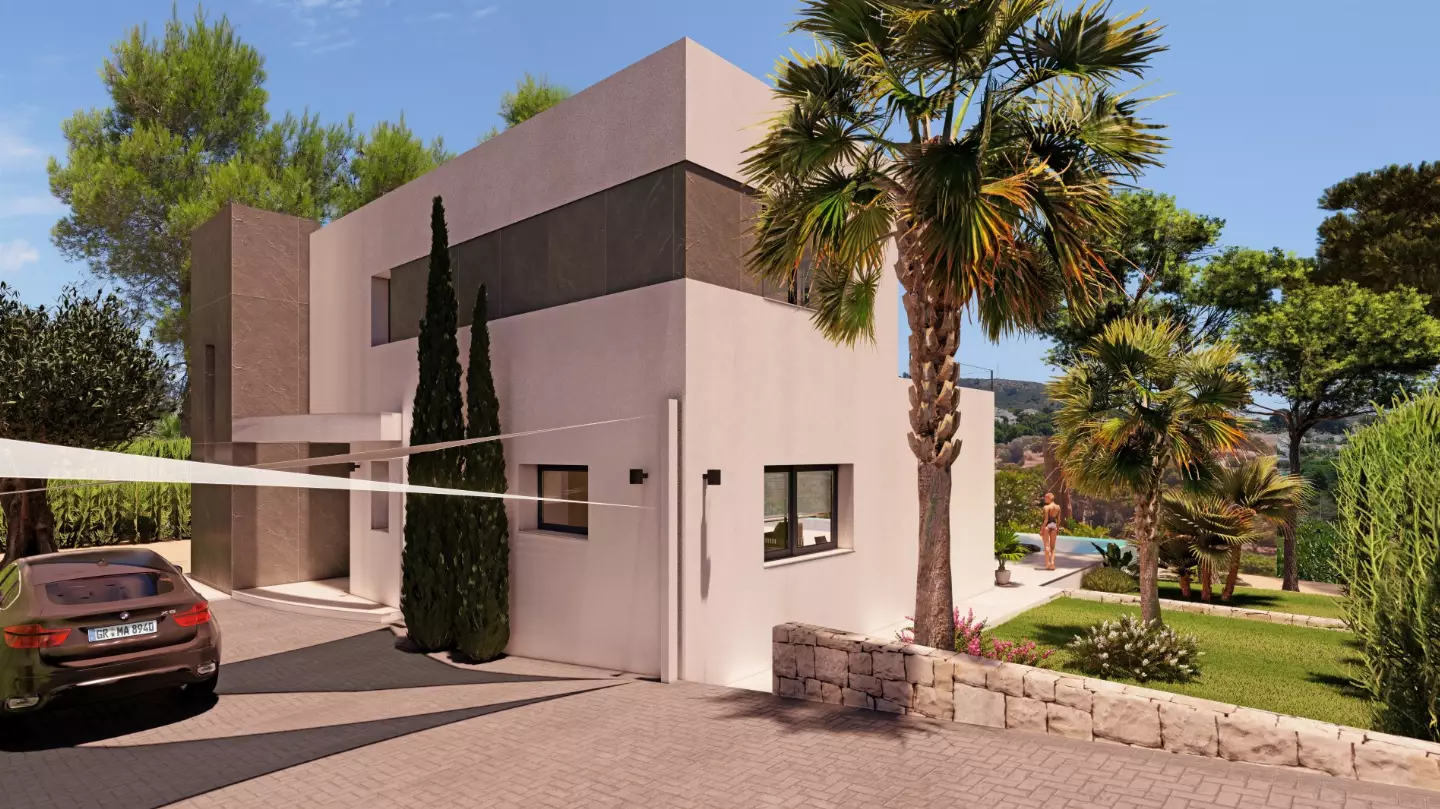
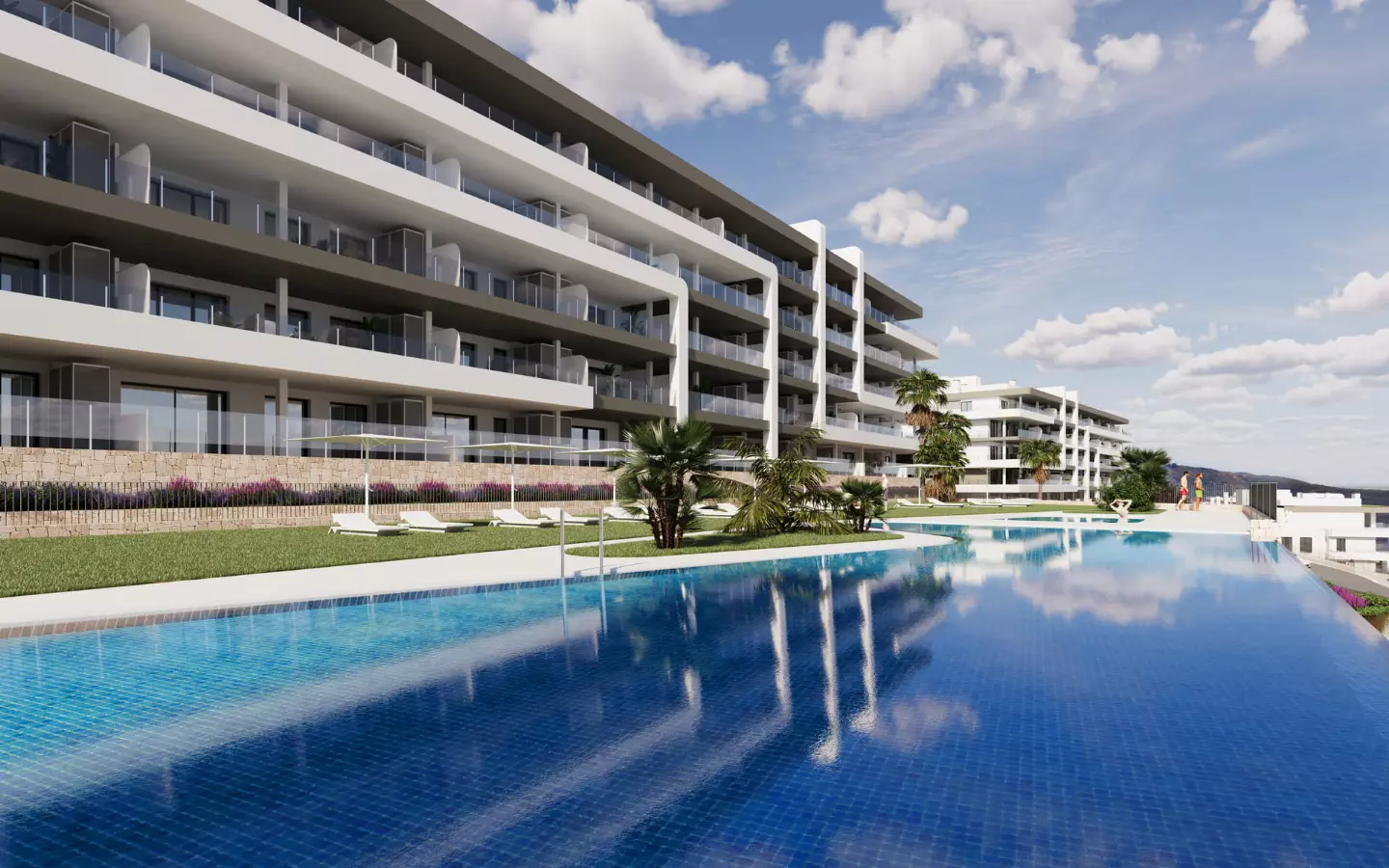
Adding everything together, budget 12 to 14% on top of the purchase price. On an apartment at Allonbay Urban — La Vila Joiosa (from €249,000), that means an additional budget of approximately €30,000 to €35,000. For a villa such as Residencias Almunia — Benijófar (€400,000 – €430,000) the figure rises to €48,000 – €60,000. On larger projects such as Alcantara del Mar Villas — Marbella (from €2,167,250) or Arena Golf — La Finca Golf (€473,000 – €965,000), the absolute amount is proportionally higher.
New-build specific: the ten-year structural insurance
Every new-build property in Spain must by law be covered by a seguro decenal — a ten-year structural insurance policy covering serious construction defects. Verify that the policy certificate is available before signing the deed. Without this document, your legal recourse for fundamental structural problems after completion is limited.
Belgian tax obligations: what you need to know
A Spanish property purchase falls outside the Belgian registration duties system: you pay no Belgian registration tax on a Spanish acquisition. However, obligations begin from that point onwards.
Belgian income tax return: every Belgian tax resident who owns foreign real estate must declare it annually in the Belgian personal income tax return (section IX, foreign real estate). Belgium applies a notional income based on the foreign rental value or the foreign taxable basis — not a Belgian cadastral income.
Belgium–Spain double tax treaty: the treaty between Belgium and Spain (in force since 1972, with subsequent protocols) allocates taxing rights over Spanish real estate to Spain. Spain taxes first. Belgium may exempt the income but retains the right to apply the progressievoorbehoud (progression clause): the Spanish property income is factored in when determining your Belgian tax rate on your other income.
Spanish non-resident tax (IRNR): if you are not a Spanish tax resident, you pay annual non-resident tax on the attributed rental value of the property (2% of the cadastral value, or 1.1% if the cadastral value was revised after 1994). This is a Spanish obligation that sits entirely separately from your Belgian declaration.
For the purchase, engage a tax adviser with hands-on experience in cross-border Belgian–Spanish situations.
New-build projects as reference points
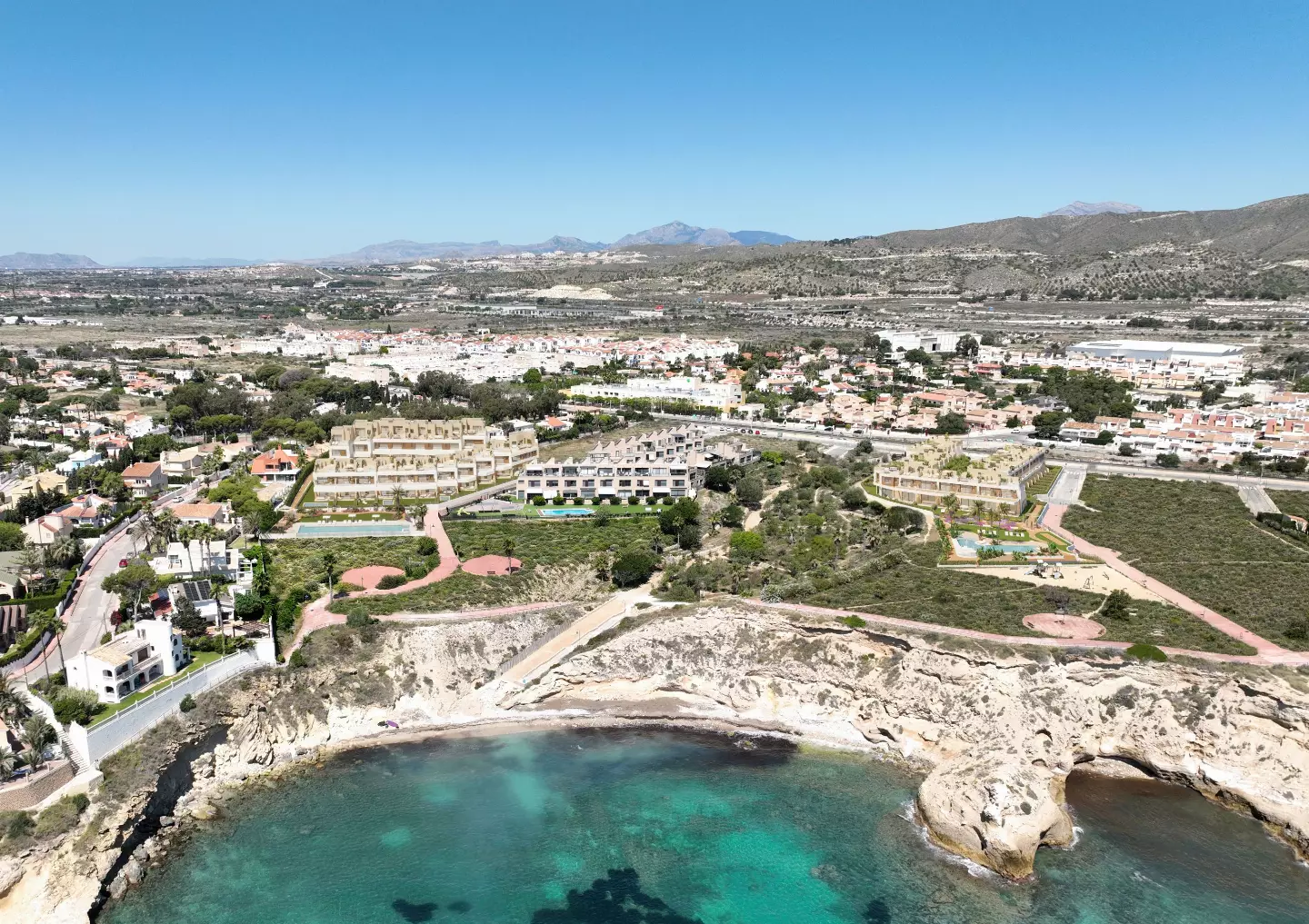
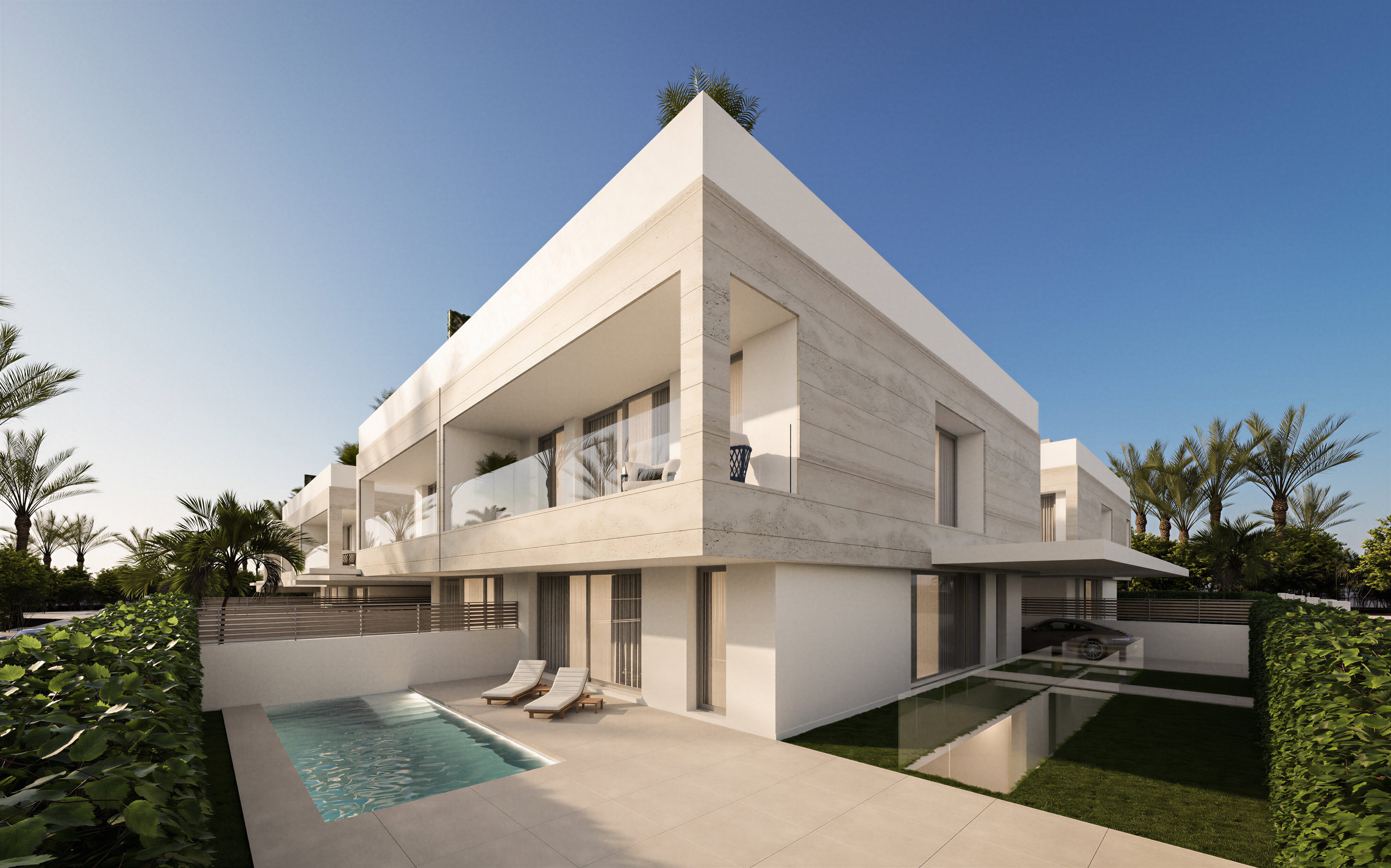
To put price levels in concrete terms: Allonbay Urban — La Vila Joiosa offers 1- to 2-bedroom apartments with a pool from €249,000; Residencias Almunia — Benijófar has 3-bedroom villas priced between €400,000 and €430,000 on the Costa Cálida. On the Costa del Sol, Alcantara del Mar Villas — Marbella (5–6 bedrooms, from €2,167,250) and Arena Golf — La Finca Golf (3–6 bedrooms, €473,000 – €965,000) sit in a higher price bracket. A full overview is available in our new-build projects in Spain.
The free buying guide contains a complete step-by-step plan including checklists.
Frequently asked questions
How do I apply for a NIE number as a Belgian?
You can apply at the Spanish embassy in Brussels (appointment required) or in Spain at the Oficina de Extranjería or local police station, typically by granting a notarised power of attorney to your Spanish lawyer. From Belgium, allow several weeks for processing.
Do I pay Belgian registration tax on a Spanish property purchase?
No. Belgian registration duties do not apply to real estate purchased abroad. In Spain you pay 10% IVA and approximately 1.2–1.5% AJD, depending on the region.
What is the difference between the Spanish arras contract and the Belgian compromis?
The arras contract is binding and carries no statutory cooling-off period. Under arras penitenciales, you forfeit the full deposit (typically 10%) if you do not proceed with the purchase. The Belgian compromis comes with legally regulated protections that do not exist under Spanish law. Always have the arras contract reviewed by your independent lawyer before signing.
What Spanish tax do I pay as a non-resident on my second home?
As a non-resident owner you pay the Impuesto sobre la Renta de No Residentes (IRNR) annually. The taxable base is 2% of the cadastral value (or 1.1% where the cadastral value was revised after 1994), taxed at 19% for EU residents.
Do I need to declare my Spanish property in my Belgian tax return?
Yes. As a Belgian tax resident you declare the Spanish property annually in section IX of your personal income tax return. Under the Belgium–Spain double tax treaty the income is exempt in Belgium, but it is included in the calculation of your Belgian tax rate on other income (progression clause).