Renting a Spanish property to tourists is not a matter of handing over keys and setting up an Airbnb profile. Every autonomous region has its own legislation. Anyone letting a property to tourists — including through platforms such as Booking.com — is legally required to register a tourist rental licence with the regional authority (Valenciana: Vivienda de Uso Turístico; Andalucía: Vivienda con Fines Turísticos). Without that registration number, the property cannot be advertised. Fines for unlicensed rental vary by region, but in both the Comunitat Valenciana and Andalucía, inspections can result in sanctions running to tens of thousands of euros.
How the licence process works
The steps are broadly consistent across most coastal municipalities. The owner submits a declaración responsable to the regional tourism authority — a self-declaration confirming the property meets minimum requirements: fire extinguishers, a first-aid kit, official complaints forms and a habitation certificate (certificado de habitabilidad). On submission, the owner receives a registration number, which must appear on every advertisement. Some municipalities — including several on the Costa Blanca — have introduced additional local restrictions or placed moratoria on new licences in certain areas. Before purchasing, it is worth confirming with the relevant municipality whether the property falls within a zone where tourist rental licences are still being issued.

New-build and off-plan purchases carry an additional consideration: a project currently under construction will not be handed over for 12 to 36 months. The tourist rental licence can only be applied for after receipt of the first occupation licence (licencia de primera ocupación). Buyers counting on rental income from day one need to account for this gap.
Tax obligations on rental income
EU-resident landlords who are not Spanish tax residents pay 19% income tax in Spain on net rental income — gross rent minus demonstrable costs such as local property tax, insurance, management fees and depreciation. Non-EU residents pay 24% on gross income with no cost deductions. Returns are filed quarterly via Modelo 210. Anyone who holds a Spanish NIE — mandatory for every property transaction — can handle this through a local gestor or tax adviser.
In addition, IBI (local property tax) is payable annually to the municipality, and many coastal municipalities charge a tourist accommodation levy (tasa turística) per guest per night, which the landlord passes on to the guest.
Purchase costs: what comes on top of the asking price
New-build properties are subject to 10% IVA (VAT) on the purchase price, plus 1.5% Actos Jurídicos Documentados (stamp duty) in the Comunitat Valenciana and 1.2% in Andalucía. Notary and land registry fees typically fall between €1,500 and €3,500 depending on the purchase price. A legal adviser normally charges 1% of the purchase price. Added together, buyers should budget for 12 to 14% in additional costs on top of the asking price.
Helvet Green — Las Lagunas de Mijas
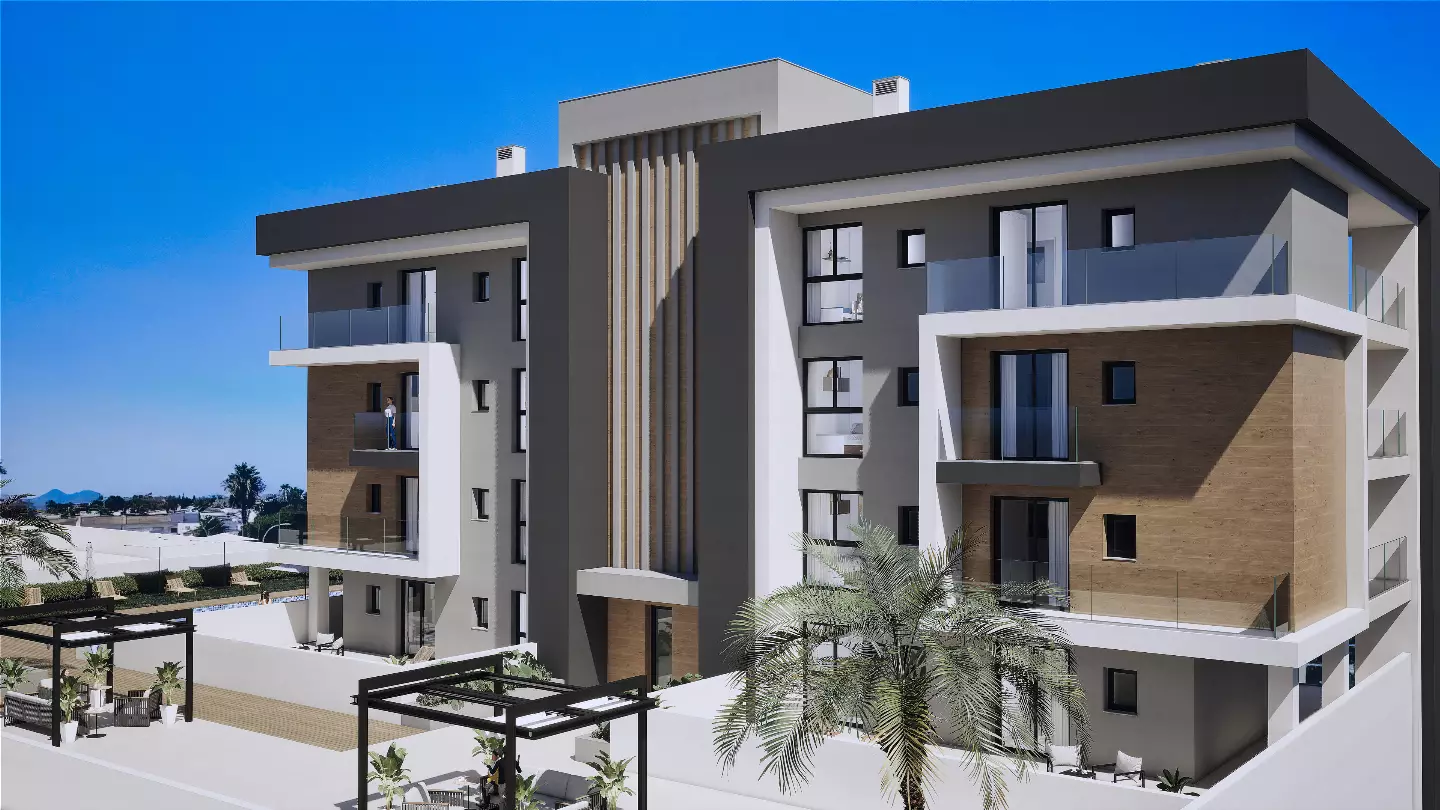
Helvet Green in Las Lagunas de Mijas (Costa del Sol, Andalucía) offers apartments, penthouses and ground-floor units with 1 to 3 bedrooms, priced from €248,000 to €1,000,000. The complex has a swimming pool. Las Lagunas is approximately 7 kilometres from Fuengirola beach and around 30 minutes by road from Málaga Airport (A-7/AP-7). Mijas has not introduced a blanket moratorium on tourist rental licences, but the municipality actively enforces compliance. For short-term rentals in the lower price bracket — one-bedroom apartments — gross rental yields of 5 to 7% are commonly cited in the literature, though actual returns depend heavily on occupancy rates and management costs.
Residencial El Yado Bungalows — San Juan de los Terreros
Residencial El Yado Bungalows is located in San Juan de los Terreros, a coastal village in the Region of Murcia (Costa Cálida), close to the border with the province of Almería. The bungalows have 2 bedrooms and a swimming pool; prices range from €409,900 to €477,900. San Juan de los Terreros sits outside the most densely tourist zones and has so far imposed no rental licence restrictions comparable to those in larger Valencian municipalities. Murcia operates its own regional rental legislation (Decreto 75/2005 and subsequent amendments); applications are submitted through the Consejería de Turismo. The proximity to the water — San Juan de los Terreros has its own bay — makes short-term summer rental realistic, though the rental market here is less liquid than on the Costa del Sol.
Green Villas — Pilar de la Horadada
Green Villas in Pilar de la Horadada (southern Costa Blanca, Comunitat Valenciana) are 2-bedroom villas priced at €490,000. Pilar de la Horadada is approximately 6 kilometres from Torre de la Horadada beach and 35 minutes by road from Alicante Airport (N-332/AP-7). Villas in this price range typically target weekly family lets; the rental season on the southern Costa Blanca runs in practice from April to October, with peak demand in July and August. The Generalitat Valenciana requires villas offered for rental to comply with the fire safety standards set out in Decreto 10/2021.
Two projects for buyers with a larger budget
For buyers considering a combination of personal use and rental at the upper end of the market, two further projects are relevant.
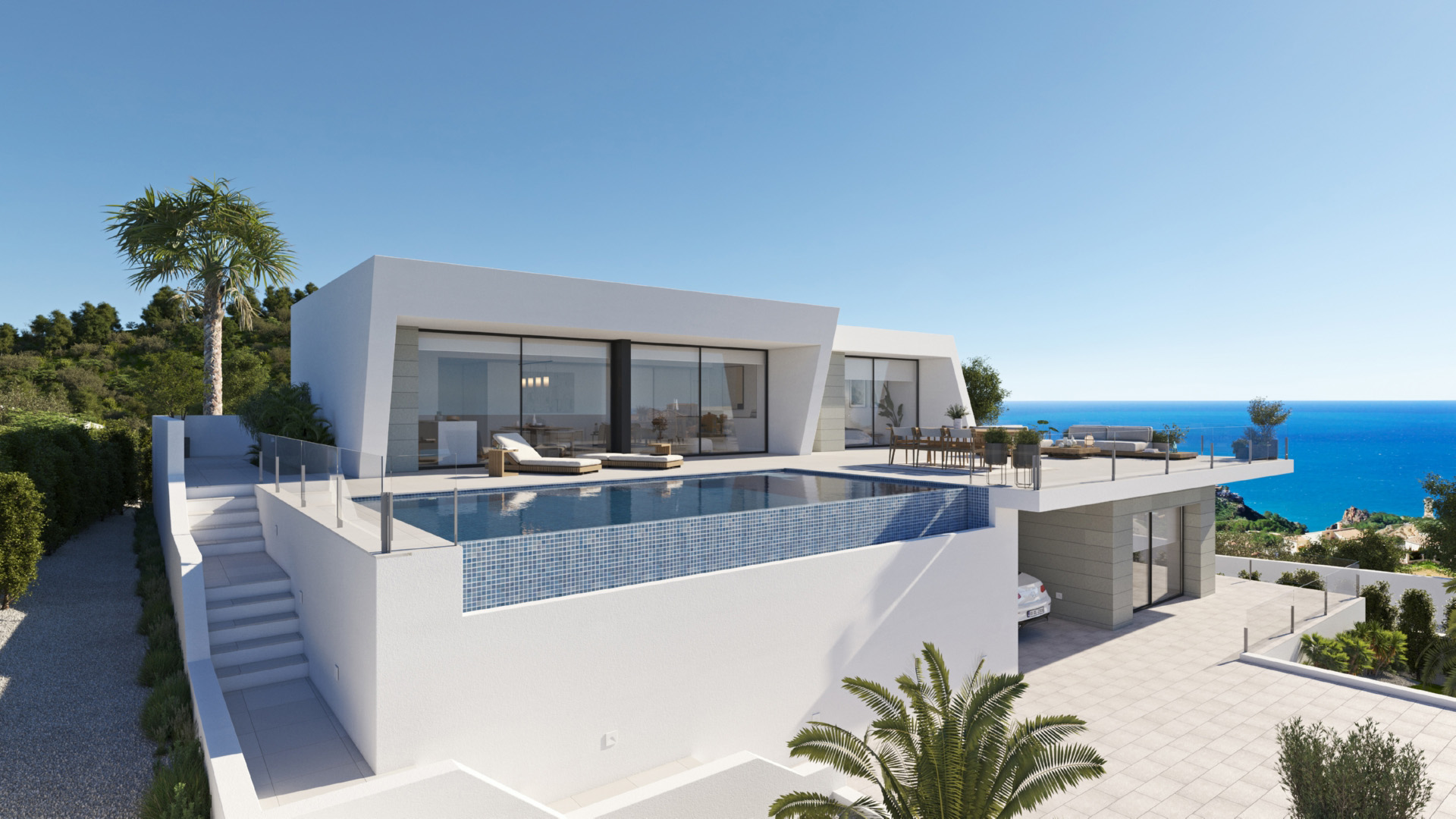
Lirios Design - Villa Altair in Cumbre del Sol (northern Costa Blanca, municipality of Benitachell) is a 3-bedroom villa priced at €2,249,000. Cumbre del Sol is a residential urbanisation on the cliffs above Cala del Moraig, approximately 12 kilometres from Jávea. The luxury villa rental market in this segment is smaller in volume but commands higher weekly rates.
Villa Irati - Raco de Galeno in Benissa (Costa Blanca) is a 4-bedroom villa priced at €3,410,000. Benissa Costa is within driving distance of Calpe and Moraira, two of the most in-demand locations for premium holiday lets on the Costa Blanca. At this price point, professional rental management — typically 20 to 25% of rental income — is in practice almost unavoidable.
What a buyer should realistically weigh up
A tourist rental licence is not a guarantee of occupancy. Actual net returns depend on proximity to the beach, the presence of a swimming pool, the seasonal pattern of the specific municipality and local management costs. Landlords renting through platforms are also responsible for VAT remittance — there is no IVA exemption for tourist rental services — and for quarterly income tax filings. Structuring a purchase in Spain for tax reasons alone makes little sense without sound advice from a local tax adviser and a lawyer who knows the local rental legislation.