Spanish mortgages for Norwegian buyers: banks, requirements and costs in 2026
Financing a property in Spain works differently from Norway or Denmark. Spanish banks apply lower loan-to-value ratios for foreign buyers, require specific documentation and follow a process that typically takes 4–8 weeks. Getting a mortgage is entirely feasible — but you need to understand the framework before committing.
How much can you borrow as a non-resident?
Spanish banks generally lend non-residents up to 60–70% of the valuation or purchase price, whichever is lower. Spanish nationals and EU citizens with income earned in Spain can typically borrow up to 80%. On a €300,000 apartment, a 70% limit means you need a minimum of €90,000 in equity — plus purchase costs, which normally run to 10–14% of the purchase price.

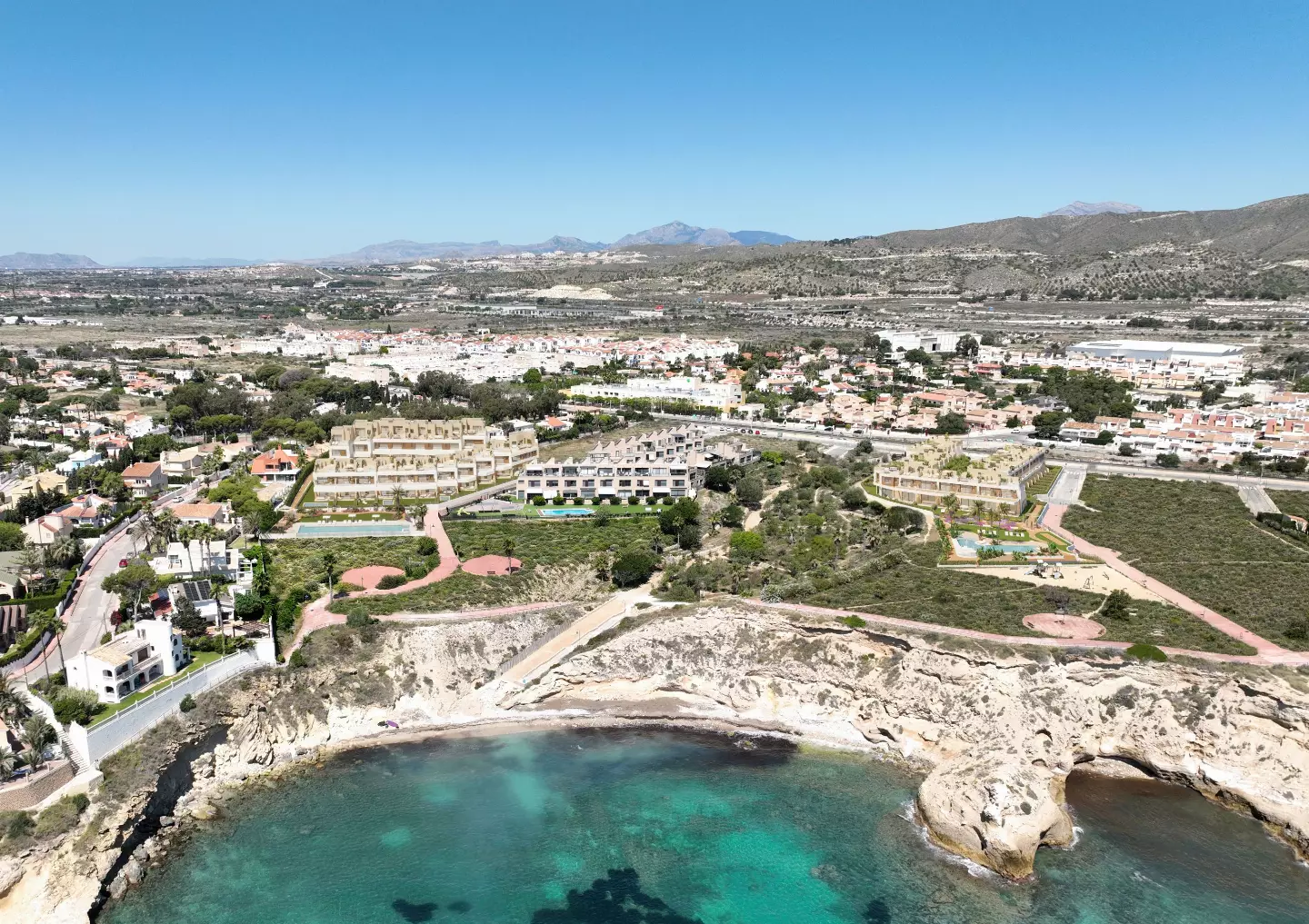
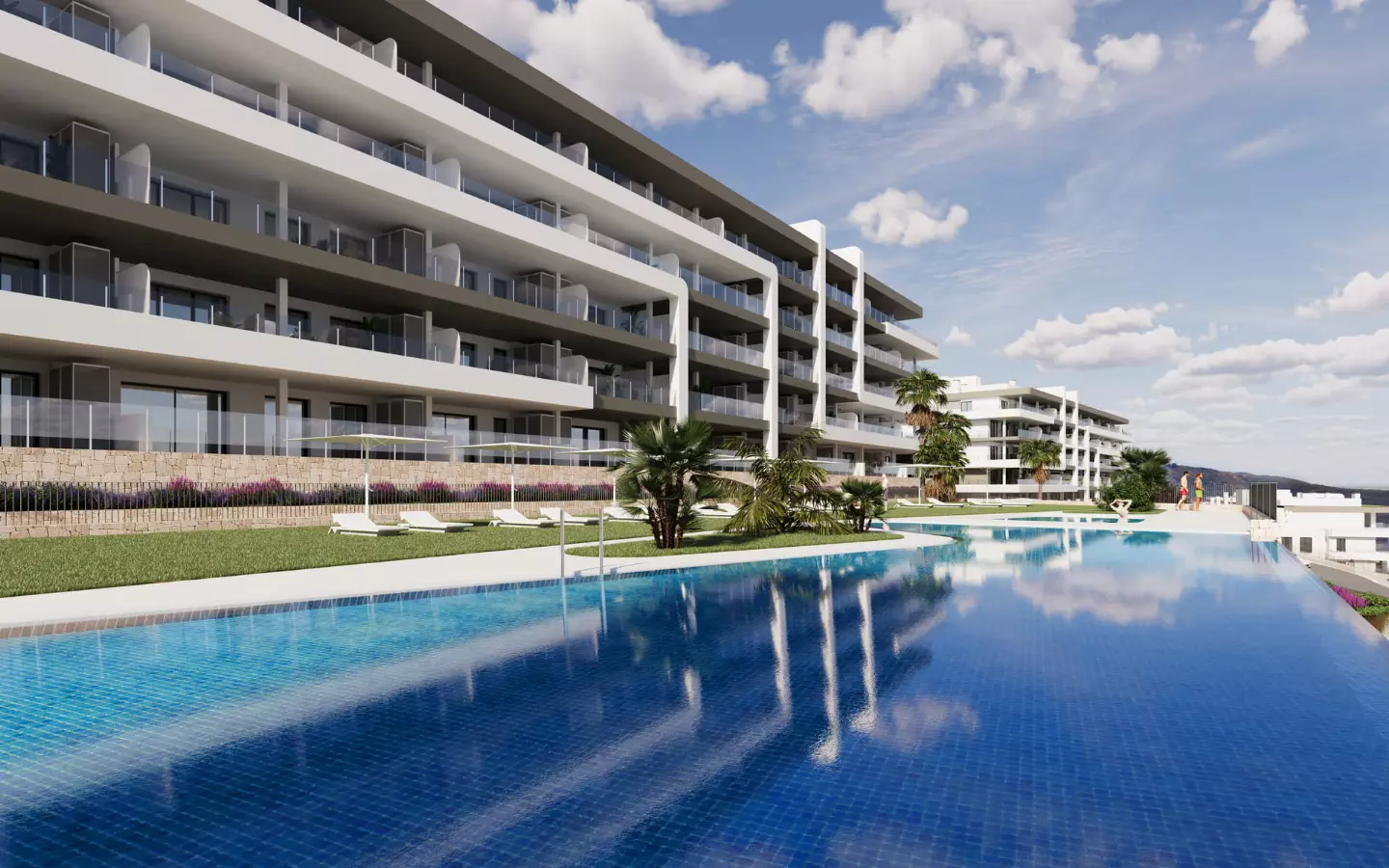
This is a critical starting point when looking at projects such as Allonbay Urban in La Vila Joiosa, where prices start from €249,000, or Residencias Almunia in Benijófar with prices from €400,000–€430,000. In both cases, your cash reserves need to be in place before you sign anything.
Required documents
Spanish banks have a standard checklist for foreign mortgage applicants. Have the following ready:
- NIE number (Número de Identificación de Extranjero) — mandatory for all property transactions in Spain
- Valid passport
- Your three most recent payslips or, if self-employed, the two most recent tax returns
- Bank statements for the past 3–6 months
- A summary of existing liabilities (loans, credit lines, leasing agreements)
- Supporting documentation of equity where applicable (savings account, securities)
The NIE can be applied for at the Spanish consulate or directly through the Extranjería office in Spain. The process normally takes 1–4 weeks, so apply early.
The bank valuation (tasación) — the key reference point
Spanish banks base the loan amount on an independent valuation called a tasación, not on the agreed purchase price. The valuer must be approved by the Banco de España. If the valuation comes in below the purchase price, the loan is calculated against the valuation figure. With new-build properties, this can occur when a project is priced above comparable homes in the same area.
A tasación typically costs €300–€600 depending on the size of the property. Since 2019, it is the bank — not the borrower — that pays the mortgage deed tax (AJD, Actos Jurídicos Documentados). This has reduced the overall setup costs for borrowers compared to before.
Fixed rate or Euribor-linked variable?
Spanish mortgages come in two main forms:
- Fixed rate for the full term — predictable, but typically at a higher starting rate
- Variable rate tied to 12-month Euribor plus a bank margin — moves with the market
Rates change continuously and vary by bank, borrower profile and location. Quoting specific figures here would be misleading — obtain offers from at least two Spanish banks and one international bank with a presence in Spain.
The maximum term is normally 25–30 years, though many banks cap it so that the loan is fully repaid before the borrower turns 75.
Timeline: 4–8 weeks
From submitting a complete application to receiving a binding mortgage offer, the process normally takes 4–8 weeks. Spanish law requires the bank to send you a standardised offer document (FEIN/FIAE) at least 10 days before you sign at the notary — use that period to read the terms carefully.
Important: Secure your financing before signing the arras contract (reservation agreement). The arras typically means you forfeit your deposit — normally 10% of the purchase price — if you withdraw. Alternatively, negotiate a financing clause that entitles you to withdraw without penalty if the loan is not approved.
New-build purchases and stage payments: how it works in practice
When buying a new-build property under construction, one rule is essential to understand: stage payments during construction are not mortgage-backed lending. These payments — typically 20–30% of the purchase price spread across construction milestones — come from your own funds.
Spanish law requires the developer to provide an aval bancario (bank guarantee) covering all stage payments. The guarantee ensures you recover your money if the project is not completed. Ask to see this guarantee and verify that it has been issued by a Spanish bank or an approved insurance company.
The mortgage itself only activates at completion (escritura) — when you sign at the notary and receive the keys. Consider how this applies to your situation if you are buying, for example, Arena Golf at La Finca Golf (€473,000–€965,000) or Alcantara del Mar Villas in Marbella (€2,167,250–€2,267,250).
Alternative: releasing Norwegian home equity
Many Norwegian buyers finance a Spanish property wholly or partly by borrowing against their Norwegian home — either through a revolving credit facility or a refinance. Advantages: Norwegian interest rate and currency exposure, and simpler documentation requirements. Drawbacks: you are tying Norwegian property equity to a Spanish purchase, and the currency risk (EUR/NOK) remains regardless. Check whether your Norwegian bank accepts foreign property as a supplementary purpose — not all of them do.
Cost summary
Allow for the following additional costs when taking out a Spanish mortgage:
- Valuation (tasación): approximately €300–€600
- Bank arrangement fee: 0–1% of the loan amount (varies)
- Notary and registration fees for the mortgage deed: set according to a government scale based on the loan amount
- AJD tax: paid by the bank since 2019
For a full overview of purchase costs beyond the mortgage, see our free buying guide.
See also all new build projects in our database to match your financing level with the relevant price range.
FAQ
Can Norwegian buyers get a mortgage in Spain without living there?
Yes. Spanish banks offer mortgages to non-residents, but the loan-to-value ratio is normally capped at 60–70% of valuation or purchase price. You will need to document income and creditworthiness in the same way as for a mortgage at home.
What does it cost to set up a mortgage in Spain?
Allow for a tasación (valuation) of approximately €300–€600, possible bank fees of up to 1% and notary fees for the mortgage deed. The AJD tax has been paid by the bank since 2019.
Do I need an NIE number before applying for a mortgage?
Yes, the NIE is mandatory for signing notarial documents and registering a mortgage charge. Apply for your NIE early in the process — it takes 1–4 weeks.
What happens to my stage payments during construction?
Stage payments during construction are not part of the mortgage — they are paid directly and must be covered by an aval bancario (bank guarantee) issued by the developer's bank. The mortgage only activates at completion.
Is it better to borrow in Norway or in Spain?
It depends on your situation. A Norwegian loan releasing existing home equity can offer a simpler process and a known interest rate, but it carries currency risk. A Spanish mortgage is directly secured against the property but requires more documentation and a processing time of 4–8 weeks. Many buyers use a combination of both.