Moving to Spain involves considerably more preparation than arranging a removal van. Tax residency, municipal registration, a Spanish bank account and a NIE (Número de Identificación de Extranjero) are all required before keys change hands. Knowing these steps in advance prevents delays at the notary or land registry.
The costs on top of the purchase price
For new-build property, the buyer pays 10% VAT (IVA) on the purchase price, plus 1.5% Actos Jurídicos Documentados (stamp duty) in most regions. On top of that come notary fees (roughly €1,000–€2,000), land registry inscription and legal fees. Budget a minimum of 12–13% above the listed price as total acquisition costs. For resale property, the Impuesto de Transmisiones Patrimoniales (ITP) replaces IVA; this rate varies by region and ranges from 6% to 10%.
Non-residents can obtain a Spanish mortgage for up to approximately 70% of the appraised value. Dutch banks rarely finance Spanish property, so approach Spanish lenders early in the process.
NIE, municipal registration and tax residency
The NIE is a fiscal identification number required for every legal and financial transaction in Spain — from opening a bank account to signing at the notary. Applications can be submitted at the Spanish consulates in Amsterdam or The Hague, or in person at an Oficina de Extranjeros once in Spain. Allow a minimum of four to six weeks if applying from the Netherlands.
After arrival, you register on the padrón municipal of your municipality. This is not merely an administrative formality: it gives access to local healthcare and municipal services. Anyone spending more than 183 days per calendar year in Spain automatically becomes a tax resident and files returns with the Agencia Tributaria. Check the implications for your Dutch tax position in advance by consulting the Spain–Netherlands double tax treaty.
Off-plan versus key-ready
New-build purchases fall into two categories. Off-plan means buying before or during the construction phase: you pay a reservation fee (typically €3,000–€10,000), followed by a deposit at the preliminary purchase contract (contrato de arras or contrato privado de compraventa) of often 20–30%, with the balance paid at notarial completion. The main risk lies in the construction period — verify that your deposit is covered by a bank guarantee (aval bancario), which is a legal requirement in Spain for off-plan sales.
Key-ready properties (llave en mano) have a shorter lead time but offer less choice in finishes. The notary procedure is identical: title deed (escritura pública), payment, land registry inscription.
Las Orquideas — Cartagena
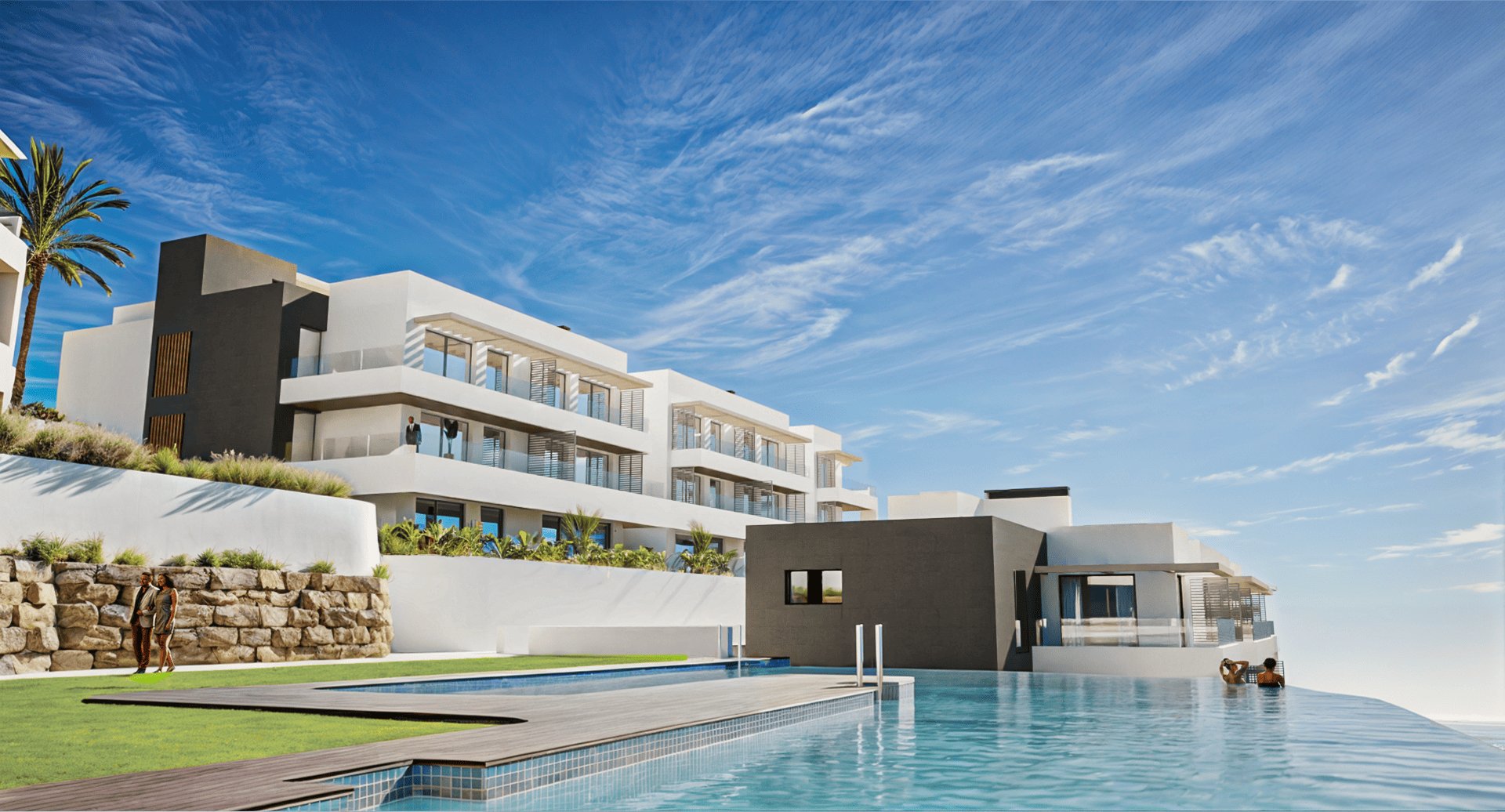
In Cartagena, on the Costa Cálida, Las Orquideas comprises ground-floor apartments, standard apartments and penthouses with two or three bedrooms, priced from €410,000 to €770,000. The development has a swimming pool. Cartagena is served by Murcia International Airport (also known as Juan de la Cierva Airport), with direct connections to several Dutch cities.
El Pinet Beach II — La Marina del Pinet
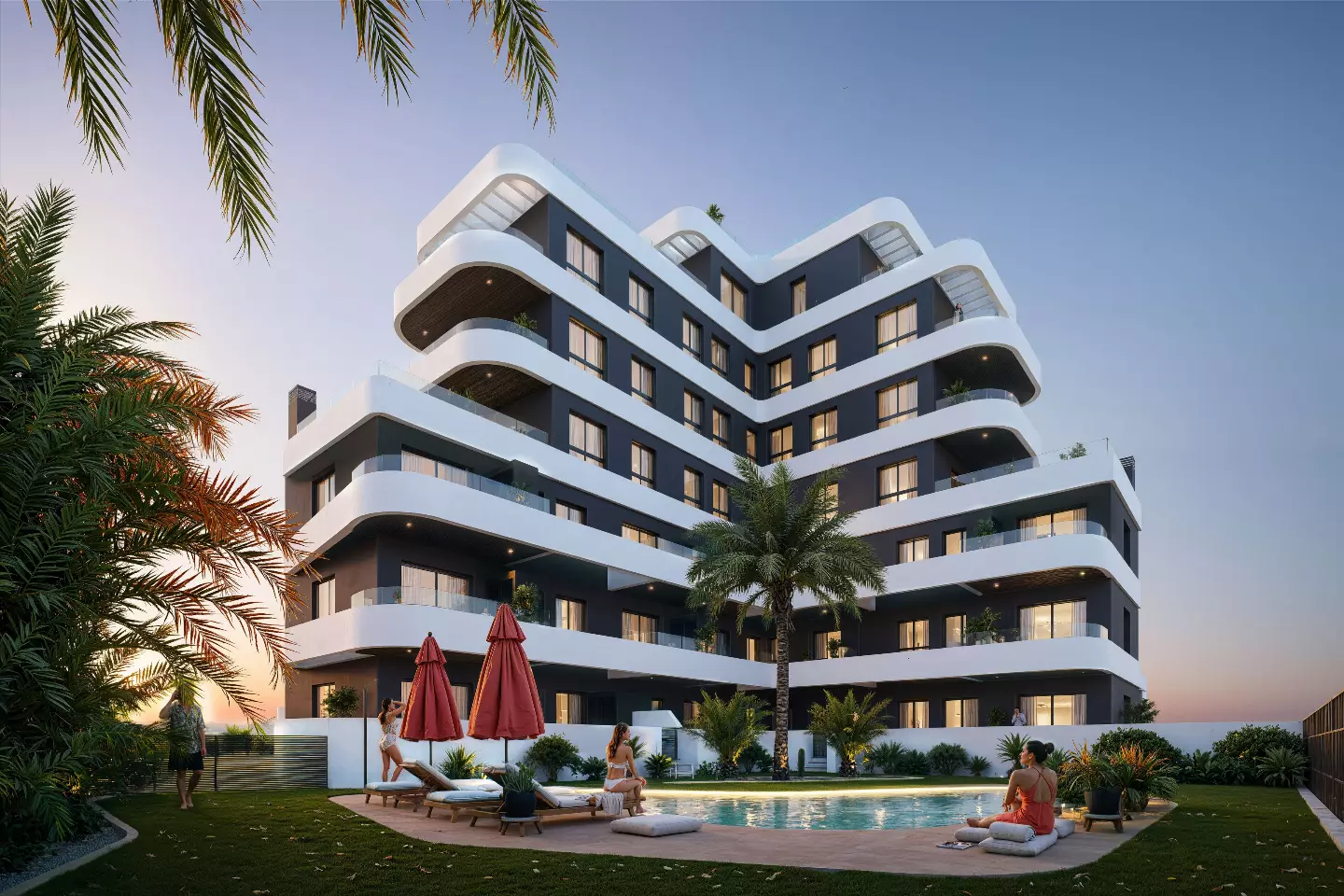
La Marina del Pinet sits on the southern coast of Alicante province, directly beside El Pinet beach and approximately 45 minutes by car from Alicante Airport. El Pinet Beach II offers ground-floor apartments, standard apartments and penthouses with two bedrooms, priced from €248,000 to €299,000. The project includes a swimming pool. This price range is relatively accessible for the Costa Blanca and attracts buyers weighing personal use against rental potential — though you should verify the local short-term rental licensing rules with the municipality of La Marina before purchase.
Idilia Terram — Rincón de la Victoria
Rincón de la Victoria is approximately 15 kilometres east of Málaga city centre, with its own stretch of Costa del Sol coastline. Idilia Terram consists of three-bedroom ground-floor properties with a swimming pool, at a fixed price of €494,000. Málaga Airport is roughly 20–25 minutes by car, which is a practical consideration for anyone flying regularly to the Netherlands. Rincón de la Victoria has an active Dutch-speaking expat community and a full range of local amenities.
Higher-segment properties on the Costa del Sol
7 Diamonds La Capellanía — Benalmádena
Benalmádena sits between Málaga and Marbella with direct access to both the A-7 and the AP-7. 7 Diamonds La Capellanía offers villas with four or five bedrooms, priced from €2,350,000 to €3,500,000. At this level, capital appreciation and wealth planning are more relevant considerations than rental yield; consult a tax adviser specialising in Spanish law regarding the implications for box 3 and the Dutch vermogensrendementsheffing.
Akira Deluxe — Dehesa de Campoamor
Dehesa de Campoamor, in the municipality of Orihuela on the southern Costa Blanca, is known for its golf courses and direct beach access. Akira Deluxe is a four-bedroom villa priced at €3,600,000. At this price point, thorough due diligence on planning permits and land registry records is standard practice — commission an independent Spanish-speaking lawyer to carry this out.
A practical timeline for the move
A realistic schedule for Dutch nationals relocating permanently to Spain runs as follows: apply for the NIE (four to six weeks before departure), open a Spanish bank account, sign the purchase contract, complete at the notary, register on the padrón municipal within thirty days of taking up residence, and file a tax return for the first full calendar year of residence. Anyone carrying temporary double housing costs should synchronise the end of Dutch rental contracts or the sale of a Dutch property with the Spanish completion date.